 MEMBERSHIP LOGIN
Problem Solvers: Finding the Best Fabrication Equipment for Your Race Shop
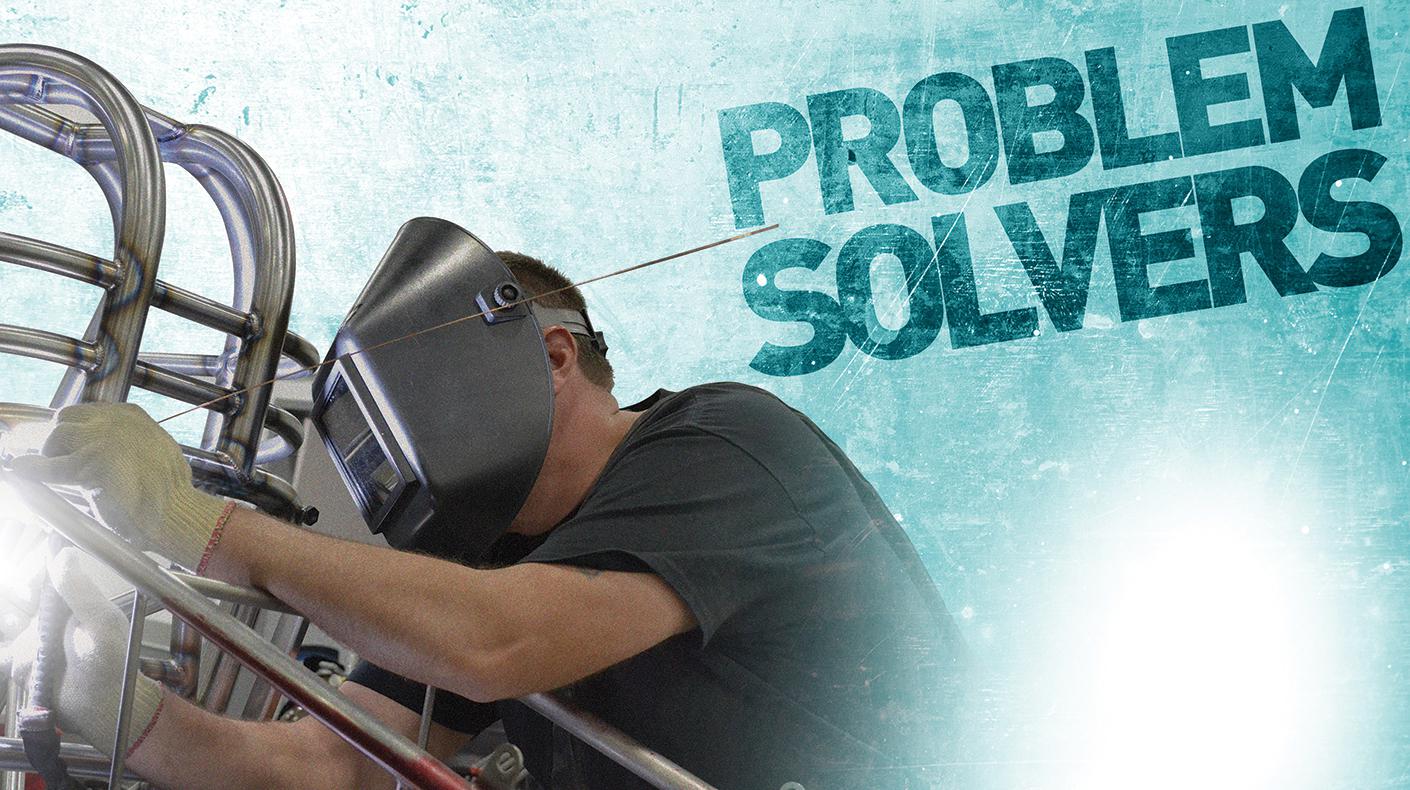
It could be as simple as a drill bit or as complicated as a plasma cutter. No matter the fabrication tool or equipment, there is plenty of new technology in the market that can help performance fabricators improve quality, save time, reduce waste—and make their lives easier.
Manufacturers and vendors coast to coast are gearing up to display their latest developments at the 2026 PRI Show, December 10–12, in Indianapolis, Indiana.
Fabrication tools and equipment represent an ideal product category for a trade show.
"If you're buying engine parts or things like that, you can't use them there," said Jim McKenzie of JMR Manufacturing, Paso Robles, California. "But if you're buying a tool," you can see it and, in many cases, try it yourself at the Show.
From digital adaptability to handling increased heat and new materials used on racecars, the fabrication industry has much to show off this year. We'll start by discussing the simple benefits of the right tool for a difficult spot.
Long and Short of It
Ann and Joseph Strong at Bad Dog Tools in Bristol, Rhode Island, are excited about the company's new Stubbies Cobalt Step Bit Set. The product debuted earlier this year, and "we'll really be hitting it hard at SEMA and PRI," Ann Strong said.
At 2.5 inches long, Stubbies are ideal for tight spaces, but they also come with 2.5-, 4- and 6-inch locking extensions that can be used separately or combined to get the bit to the spot you need.
The Strongs were working on a project where they had to drill a hole for a fuel line to pass through a firewall and needed to span a 6- to 7-inch space for the bit to reach.
"A sheetmetal bit is the right bit to do it with, but it's too short," Ann Strong said. "We're like, 'Well, if we need this, other people do, too.'"
Stubbies have the same cobalt tips as Bad Dog SMB sheetmetal bits, and their quick-connect hex shank drops into an impact gun or standard drill. The bits use the same self-centering stepped tip that walks into material without a center punch.
"We tested it extensively to make sure we had one that would actually cut and not just sit there and burn a hole through the metal," Joseph Strong said.
He noted that it's a tool that does many jobs but doesn't take up much space in a toolbox. "You use a short bit and get tight inside of a door frame," he explained, "or [using an extension] you can be out 12 inches working on the firewall."
Around the Bend
Bend-Tech in Osceola, Wisconsin, earlier this year rolled out the PB 2000 DC-Versatile CNC Tube and Pipe Bender, a four-axis CNC rotary draw machine that eliminates the "black art" of tube bending, said Kyle Merry.
"What fabricators are able to do is either design in our CAD or import full assemblies, and you just grab the part that you want to bend from that import," he said. "It does all those calculations of spring back and stretch."
He said the PB 2000's functionality comes from in-house development of CAD programming, creating "a software ecosystem for unskilled workers to basically become engineers."
There is more time to be saved when customers combine the bender with Bend-Tech's Dragon A400 CNC Tube and Pipe Plasma Cutter, according to Merry. Users simply transfer files via Wi-Fi from the Dragon to the bender.
Merry added that while setting up his booth at a recent PRI Show, a customer who was also exhibiting approached him about the Dragon A400. "He goes, 'Hey, we've got a chassis in our booth that…it's currently Wednesday, and I started it on Friday,'" Merry said. The customer continued, "'We would not have anything in our booth if it wasn't for your equipment and the amount of time that it saves.'"
The customer had consolidated production time from three weeks to three days, which led Merry to acknowledge an old adage: "The biggest problem that we're always solving is time."
In discussing making life easier for fabricators, McKenzie at JMR Manufacturing focused on the electric/hydraulic tube bender with auto stop, a high-production yet affordable bender.
"A lot of businesses don't need a full computerized bender, and they also don't want to go through the learning curve," he said. "So we came up with a system that allows fabricators to repeatedly bend within a 10th of a degree of accuracy, and it's an under-$5,000 bender."
Efficiency in the shop can also be improved with JMR's slotted welding and fabrication tables, which combine a bender, tube notcher, and table. They have built-in adjustable mounts, which McKenzie said solve one of the most difficult steps in bending: keeping bends in plane with one another, such as two 90-degree bends on a rollcage. The adjustable mounts allow the operator to raise and lower both the bender and the notcher to put the two perfectly in plane with the top of the table.
To read the full article, plus hundreds of other articles like it for free, sign up for a digital subscription to PRI Magazine on Zinio here.
Once you download the Zinio mobile app or are logged into Zinio on a desktop browser, you will gain immediate access to more than a year's worth of content, including "Problem Solvers: Finding the Best Fabrication Equipment for Your Race Shop" here and additional coverage in the August 2026 issue here.